


 English (EUR)
 Français (EUR)
 Deutsch (EUR)
 Español (EUR)
 Česky (CZK)
 Polski (PLN)
 Slovensky (EUR)
 български език (EUR)
 Română (RON)
 Italiano (EUR)
 US
US Bulgaria
 Hungary
 Romania
Most Common Coffee Machine Faults and How to Fix Them
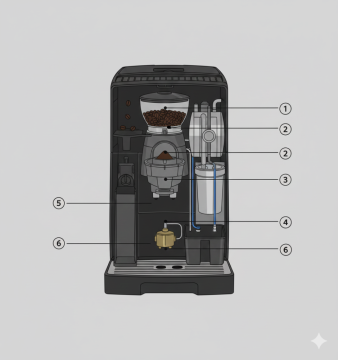
TL;DR
- Most automatic coffee machine failures are caused by brew units, valves, and electronics – not worn seals, as many users assume.
- Repair costs range from €80 for simple fixes to €400 for complex electronic issues.
- Some repairs can be done at home without disassembling the machine, while others require professional diagnostics.
Why Do Coffee Machines Fail?
Automatic coffee machines are complex devices with dozens of moving parts, electronic control boards, and hydraulic systems. A typical home coffee machine produces thousands of coffees during its lifetime, which means enormous mechanical stress.
The most common problems are not related to worn seals, as most users think. Seals in quality coffee machines can last up to 10 years. The real causes of failures are mechanical valves, electronic components, and brew units.
DeLonghi: Machine Does Not Push Water or Leaks Into Drip Tray
This is the most common fault in DeLonghi coffee machines. Users often assume it's a worn seal, but in 80% of cases, the cause is a mechanical valve or piston.
How to Recognize This Fault
The machine turns on, you can hear the pump working, but water does not flow into the cup. Instead, water appears in the drip tray. Some models display an error message, others continue the cycle without result.
Solution
Replacing the mechanical valve or piston requires disassembling the coffee machine and accessing the hydraulic system. This is a service repair that should be performed by a technician experienced with DeLonghi machines.
Estimated repair cost: €150 – €180 including VAT and spare parts.
DeLonghi: General Alarm
The "general alarm" message is a diagnostic challenge. DeLonghi uses this message when the machine cannot identify a specific problem. There can be several causes, and diagnostics sometimes take several hours.
Most Common Causes in Order of Probability
The first and simplest cause is a faulty NTC sensor on the steam boiler. This sensor measures temperature, and when it fails, the machine cannot evaluate the heating status.
The second common cause is thermostats on the steam boiler. The electronics detect that the machine cannot heat up to operating temperature and trigger a general alarm.
The third cause is the power electronics. This problem is often linked to a faulty NTC sensor – the electronics do not turn off heating even after reaching the correct temperature and repeatedly damage new NTC sensors.
Solution
Diagnostics require systematic testing of individual components. It starts with the NTC sensor, continues with thermostats, and ends with checking the control board.
Estimated repair cost: €150 – €280 depending on the scope and duration of diagnostics.
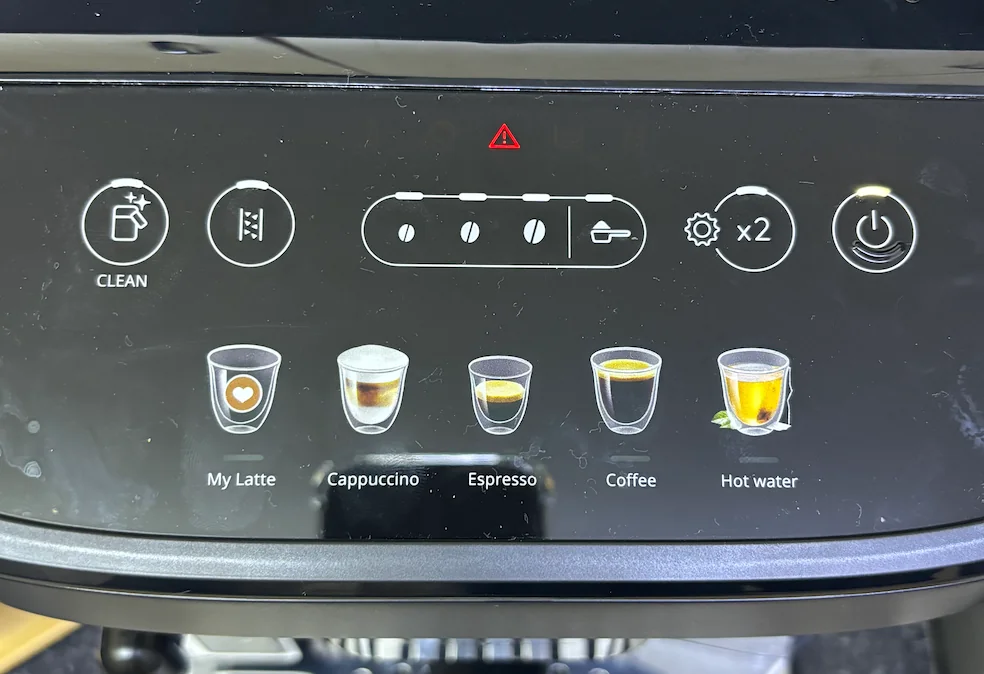
DeLonghi: "Coffee Too Finely Ground" Message
This message is often misleading. The machine is actually reporting that water is not flowing through the system properly. The manufacturer's original intent was to warn about too fine grinding blocking the flow, but in practice, this message usually has nothing to do with grinder settings.
Real Causes
Clogged hoses in the hydraulic system are a common cause. Deposits from water or coffee oils gradually narrow the flow.
The mechanical valve may be stuck or clogged. Solenoid valves that control water flow may stop opening or closing properly.
The flow meter, which measures the amount of water flowing through, may be damaged and not sending correct signals to the control board.
Solution
Repair involves cleaning or replacing affected components. The technician must systematically check the entire hydraulic path from the water tank to the coffee outlet.
Estimated repair cost: €130 – €200
Philips: Machine Does Not Grind Coffee
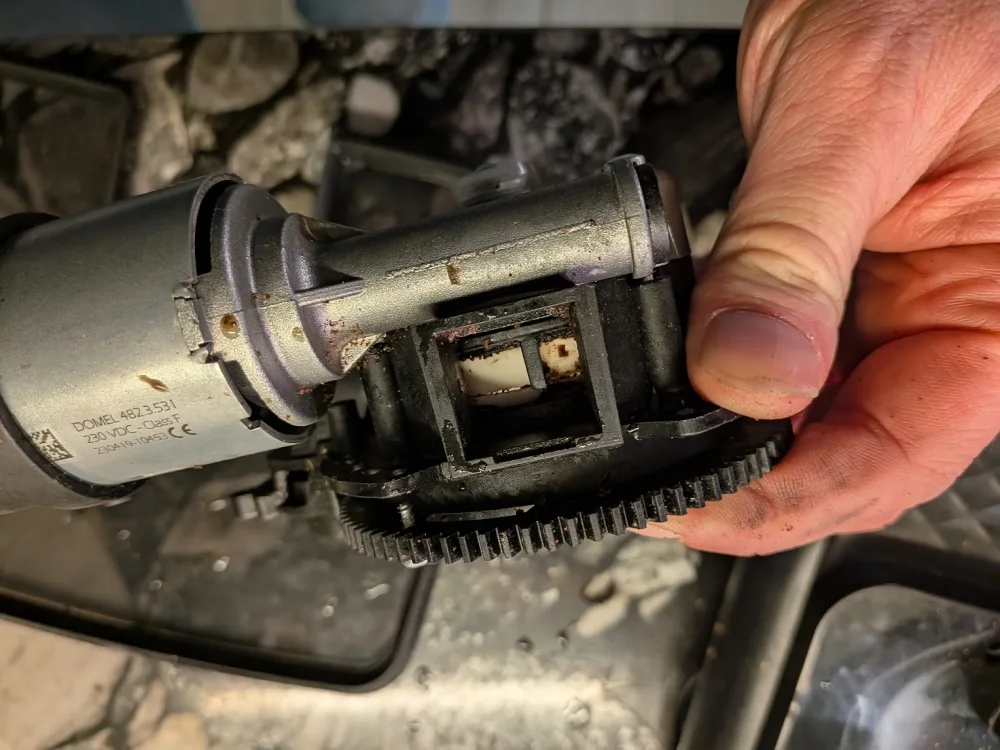
When a Philips coffee machine stops grinding coffee, there are three main causes with varying repair difficulty.
Faulty Grinder Motor
The most common cause. The grinder motor wears out or burns out and the grinder stops working completely.
Broken Coffee Chute
If you hear the grinder working but coffee does not fall into the brew unit, the plastic chamber that guides ground coffee from the grinder is probably damaged. This is a very simple repair.
Faulty Control Board
The electronics are not supplying voltage to the grinder motor. This cause is less common but requires replacing the control board.
Solution
Diagnostics start by checking whether the grinder makes a sound. If yes, the problem is probably in the chute. If not, check the motor and then the electronics.
Estimated repair cost: €130 – €160
Philips: Water Leaks Into Drip Tray
This fault has a straightforward solution and is among the repairs that even a home user can handle.
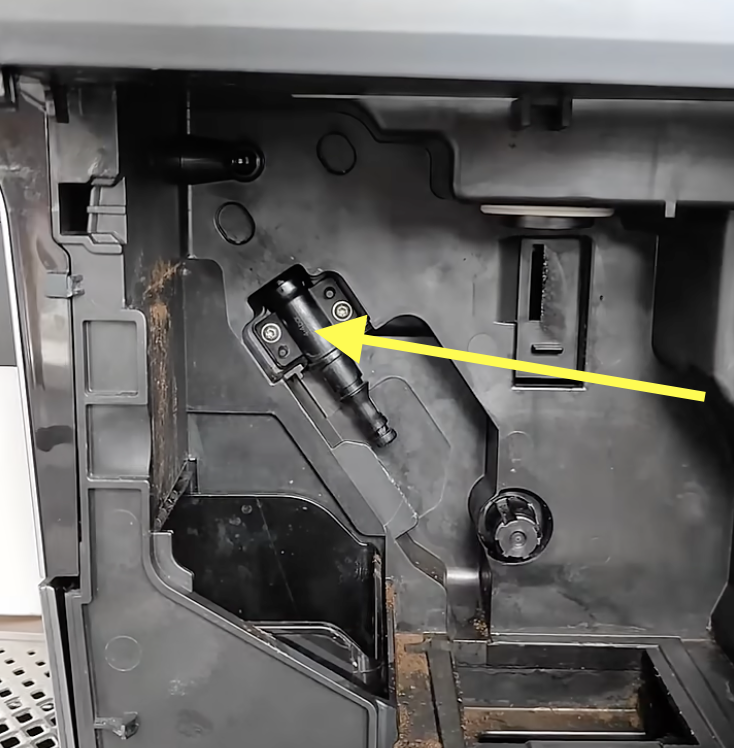
First Step: Pin Valve
The most common cause is a worn pin valve. This is a small component that the user can replace at home without disassembling the coffee machine. The pin valve is accessible from the outside and replacement takes just a few minutes.
Second Step: Brew Unit
If replacing the pin valve does not solve the problem, the cause is probably a worn brew unit. Users can also replace this themselves – Philips brew units are removable and do not require accessing the inside of the appliance.
Estimated repair cost: €80 – €160
Jura: Error 8 (Störung 8)
Error 8 on Jura coffee machines means that the brew unit is not in its correct position. Despite the simple wording, this is a specific fault with several possible causes.
Main Cause
In most cases, a new brew unit is needed. Unlike some other brands, Jura brew units are not user-removable, but for an experienced DIY enthusiast, replacement is manageable.
Alternative Causes
The encoder, which counts the brew unit rotations, may be damaged and sending incorrect data to the control board.
The shaft between the motor and the brew unit may be worn or broken.
Solution
Repair requires disassembling the coffee machine and checking the brew unit, encoder, and mechanical connection to the motor. For an average DIY enthusiast, this is a moderately difficult repair.
Estimated repair cost: €200 – €400
Is It Worth Repairing a Coffee Machine?
This is the most common question we receive. The answer depends on the age of the coffee machine, the type of fault, and especially how many coffees the machine has already made.
Number of Coffees as a Wear Indicator
The number of coffees produced tells you more about the condition of the coffee machine than its age. It can be compared to mileage on a car.
A coffee machine with 1,000 coffees made is like a car with 10,000 km – practically new, all components should be in good condition. Repair is definitely worth it.
A coffee machine with 10,000 coffees is like a car with 100,000 km – normal wear, standard maintenance. Most repairs make economic sense.
A coffee machine with 30,000 coffees is like a car with 300,000 km – high wear, you need to consider whether repair is still worthwhile. With such a heavily used machine, another component may fail soon after one repair.
When Repair Is Worth It
The repair cost does not exceed 50% of the price of a new comparable coffee machine. The machine has less than 20,000 coffees made. It is a quality model from an established manufacturer. Spare parts are available.
When Not to Repair
The repair would cost more than half the price of a new model. The machine has made 25,000+ coffees and has already had multiple repairs. The machine has recurring electronics problems. The model is older than 8–10 years and spare parts are hard to find.
Repair Cost Comparison by Brand
| Brand | Typical Fault | Difficulty | Repair Cost |
|---|---|---|---|
| DeLonghi | Mechanical valve / piston | Medium | €150 – €180 |
| DeLonghi | General alarm | Hard | €150 – €280 |
| DeLonghi | Water flow ("coffee too fine") | Easy | €130 – €200 |
| Philips | Grinder motor | Medium | €130 – €160 |
| Philips | Pin valve / brew unit | Easy | €80 – €160 |
| Jura | Error 8 (Störung 8) | Hard | €200 – €400 |
How to Prevent Failures
Regular maintenance significantly extends the life of your coffee machine. Descaling according to the manufacturer's instructions prevents limescale buildup in the hydraulic system. Cleaning the brew unit removes coffee oils that can cause the mechanism to jam.
Using filtered water reduces stress on hydraulic components. Regularly removing and washing the brew unit (if removable) helps maintain smooth operation of the mechanism.
Conclusion
Most automatic coffee machine faults are repairable at a reasonable cost. The key is proper diagnostics – many problems have a different cause than the user would initially assume. For simpler Philips repairs, users can help themselves, while more complex DeLonghi and Jura faults require an experienced technician.
Automatic coffee machines most commonly fail due to mechanical valves, brew units, and electronics – not seals. This guide covers diagnostics for DeLonghi faults (water not flowing, general alarm, "coffee too fine"), Philips issues (not grinding, leaking), and Jura Error 8 (Störung 8). Includes real repair costs, difficulty comparison, and a practical rule: a machine with 30,000 coffees is like a car with 300,000 km.
Discussion